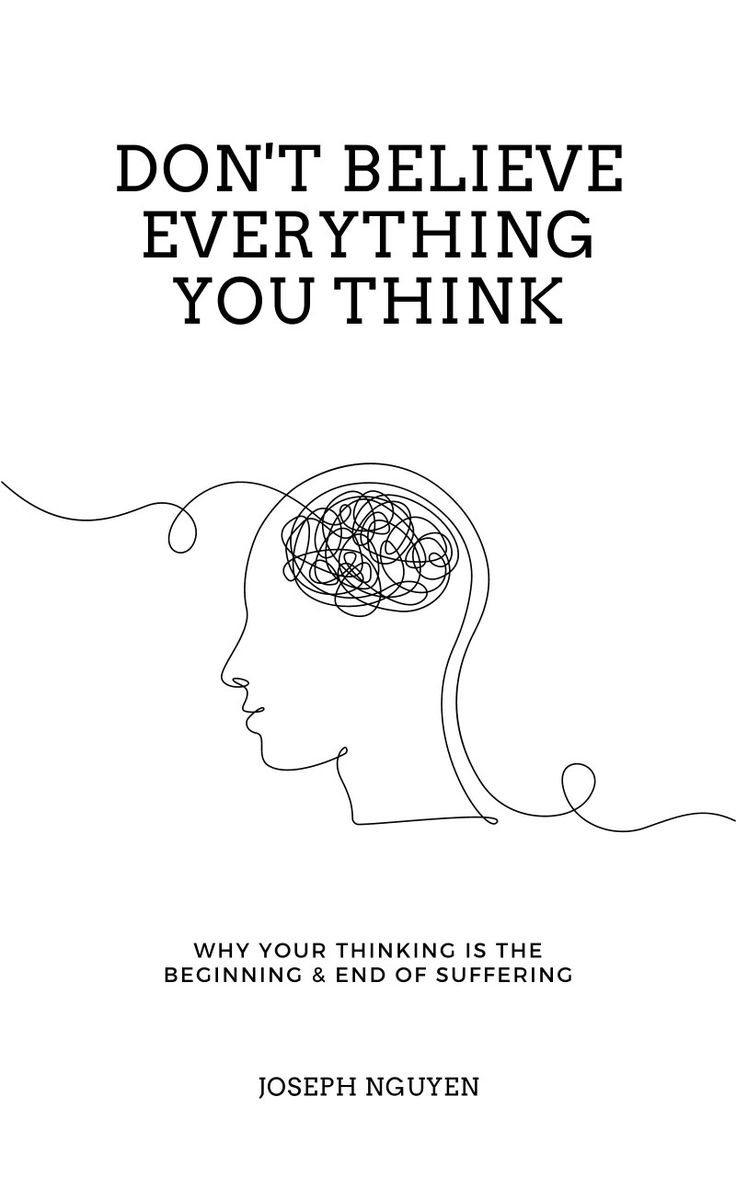
What the Book Is About
Don’t Believe Everything You Think explores the idea that many of our problems — especially stress, anxiety, and suffering — arise not directly from circumstances, but from how we think about them. The author argues that by questioning, detaching from, and letting go of unhelpful thoughts, we can create mental peace and live more fully. It’s positioned as a short, accessible self-help book blending mindfulness, spirituality, and insight into the nature of thought. Goodreads
⭐ Key Themes
🧠 Thoughts vs. Thinking
Nguyen emphasizes distinguishing between individual thoughts (which are transient) and the act of thinking itself (a broader mental process). The book suggests that believing everything your mind tells you often leads to unnecessary suffering. Books & Review
🌿 Mindfulness & Inner Wisdom
He encourages readers to observe thoughts without engaging with them as truth, and to cultivate inner calm by creating space between thoughts and reactions. Books & Review
💡 Spiritual & Reflective Tone
The book mixes psychological ideas with more spiritual insights — for example, trusting intuition or inner guidance rather than automatic thought patterns. Books & Review
📈 What Many Readers Liked
👍 Accessible and Easy to Read
The writing is simple and non-technical, making it approachable for readers new to mindfulness and self-help concepts. It’s also fairly short, which appeals to casual readers. Libliva
👍 Helpful Reminder for Overthinkers
Many readers found its core message useful for reducing overthinking and calming anxious mental loops. The idea of stepping back from thoughts resonates with people seeking emotional balance. SoBrief
⚠️ Common Criticisms
👎 Repetitive Content
Some readers and reviewers point out that the book’s ideas are repeated frequently without much deep development, which can make it feel redundant. BOOKS AMEYA
👎 Lacks Scientific Depth
Critics say it doesn’t offer strong psychological evidence or structured exercises — leaning more on philosophical and spiritual descriptions than on research-backed techniques. Desi Readers
👎 Writing and Structure
A portion of the audience has described the writing as overly simplistic, lacking editing polish, and sometimes even confusing or “immature” in tone. Goodreads
🧠 Who This Book Is Best For
✔️ People who overthink and want a gentle mindset shift
✔️ Readers interested in mindfulness or simple self-reflection
✔️ Those looking for short, accessible motivational reading
It’s likely less useful for readers seeking in-depth psychology, clinical tools, or structured mental exercises.
📌 In Short
Don’t Believe Everything You Think offers a friendly, accessible invitation to step back from your habitual thought patterns and reduce mental suffering by challenging the assumption that “every thought is true.” While it delivers a powerful, calming message for many readers, its simplicity, repetition, and lack of rigorous examples mean it won’t satisfy everyone — especially those wanting more analytical depth or concrete techniques.
 KAAZU
KAAZU 
Leave a comment