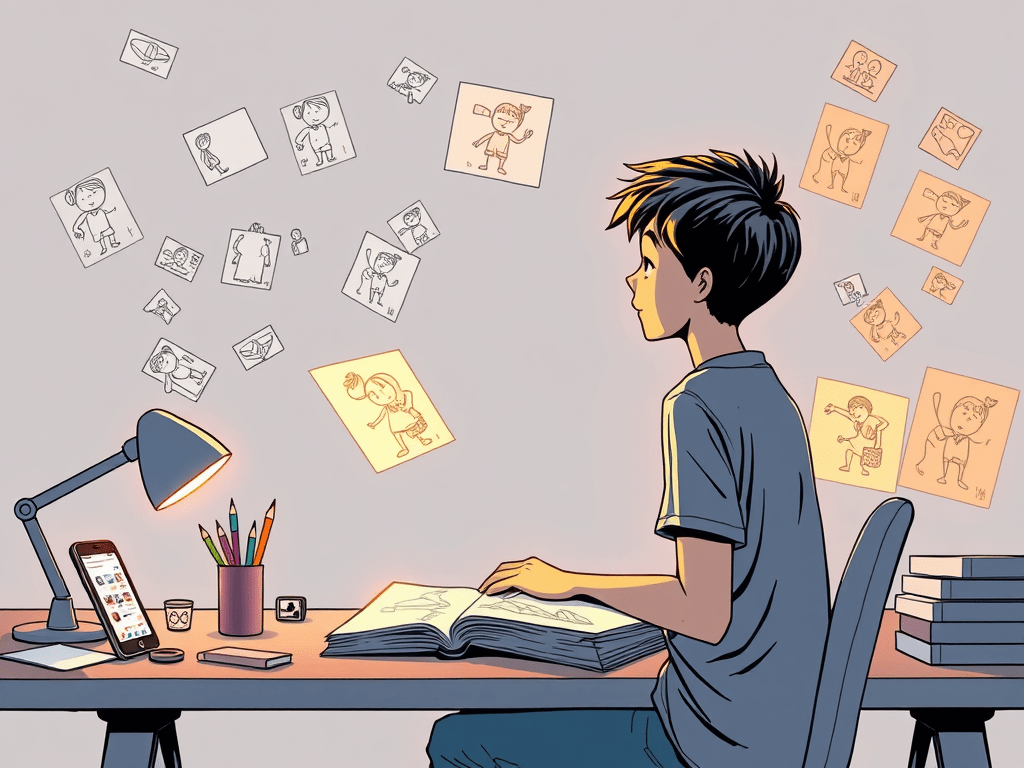
When I was younger, I had this phase. I’d scroll through Instagram, find a drawing I loved, and try to recreate it exactly same colors, same lines, same aesthetic lighting for the final picture. Sometimes I got close. Sometimes I didn’t. The shade would feel slightly off. The strokes looked different. The photo didn’t carry the same vibe.
And then one day, a strange thought crossed my mind:
If I’m going to make the exact same drawing and take the exact same picture with the exact same lighting… why not just screenshot it and post it?
It would look more “accurate,” right?
But that’s when it clicked. That would be cheating. It wouldn’t be mine.
And here’s the ironic part, even if I recreated it perfectly, people would still see it as a copy. Because plagiarism isn’t about how accurate something looks. It’s about intention. It’s about passing someone else’s work off as your own.
That realization changed everything. I stopped obsessing over replication and started questioning why I was trying so hard to look identical in the first place.
The truth is, we all begin by copying. That’s how learning works. You observe patterns, imitate techniques, study structure. Copying is training. It teaches you how things function. It builds awareness.
What I realised late was that the “mistakes” in my drawings were consistent. The slightly different lines. The color shifts. The small variations. They kept repeating. What I thought were failures were actually patterns.
‘And patterns are the foundation of style.’
Because no matter how hard we try, humans cannot produce identical copies. There will always be some difference in pressure, emotion, perspective, timing. We are not machines.
→ In ‘Steal Like an Artist’, Austin Kleon explains the idea of good theft and bad theft.
Bad theft is copying without understanding, without credit, without transformation.
Good theft is studying deeply, absorbing influence, and reshaping it into something new.
‘You would never learn if you didn’t copy. But copying to learn is completely different from copying to replace someone’s work.’
In the end,
We are remixes of what we love. The things we admire slowly shape us. But the output will never be identical because it passes through us first.
The best way forward isn’t blind imitation. It’s recognizing the pattern, understanding how it works like a system, and then rebuilding it in your own way.
That’s when copying turns into creating.
 KAAZU
KAAZU 
Leave a comment